

The Code
Ten principles for building what survives you.
A framework for decisions across a lifetime and beyond it. It begins with a man who governs himself, trains his body and takes responsibility for what he builds.
The structure is not the principle.
Continuity is the principle.
Govern yourself
Self-autonomy begins with command of your attention, impulses, time, money and word. Make deliberate choices. Build the competence and resources to act on them. Freedom means accepting responsibility for the life you choose.
Self-autonomy in practice →Train your body
You must work out. Get in the gym and build strength. Train consistently, develop your conditioning and take recovery seriously. Physical capability supports independence and makes you more useful to the people who rely on you. Discipline must exist in your calendar, not only in your opinions.
The training principle →Judge by consequence
Good intentions do not settle the question. Ask what a decision produces now, what follows from it, and what happens when it becomes a habit or a rule. Be willing to revise your position when the consequences contradict it.
Explore consequence →Choose structure, not dogma
Monogamy, polygamy, companies, schools and governments are structures. They serve functions. Choose the structure that supports the objective and accept the duties it creates. Replacing one unquestioned convention with another is not independent thought.
Structure and the household →Build for continuity
Ask what continues because you existed: capable children, knowledge, productive capital, a business, an institution or a body of work. Build something another person can receive, maintain and improve.
Continuity at scale →Carry the responsibility
Authority creates obligations. Be answerable for your decisions and clear about your commitments. The people closest to you should experience your strength as reliability, honesty and protection, never as an excuse for cruelty.
Create productive value
Build useful things. Develop skills, solve problems and put capital to work. Enterprise matters because it can leave the next generation more capable than the last. Consumption alone cannot do that.
Enterprise and creation →Prepare the next generation
Inheritance is more than assets. Teach judgment, discipline and the ability to do difficult work. Children and successors need the competence to carry responsibility, not simply access to what you accumulated.
Read the legacy thesis →Build beyond your presence
Write things down. Teach other people. Establish standards and a way to correct mistakes. A household, company or institution that collapses without its founder has not yet learned how to continue.
Institutions and succession →Strengthen the inheritance
Preserve what works, repair what fails and build what is missing. Tradition and innovation both answer to consequence. Leave the people and systems you touch more capable of carrying life forward.
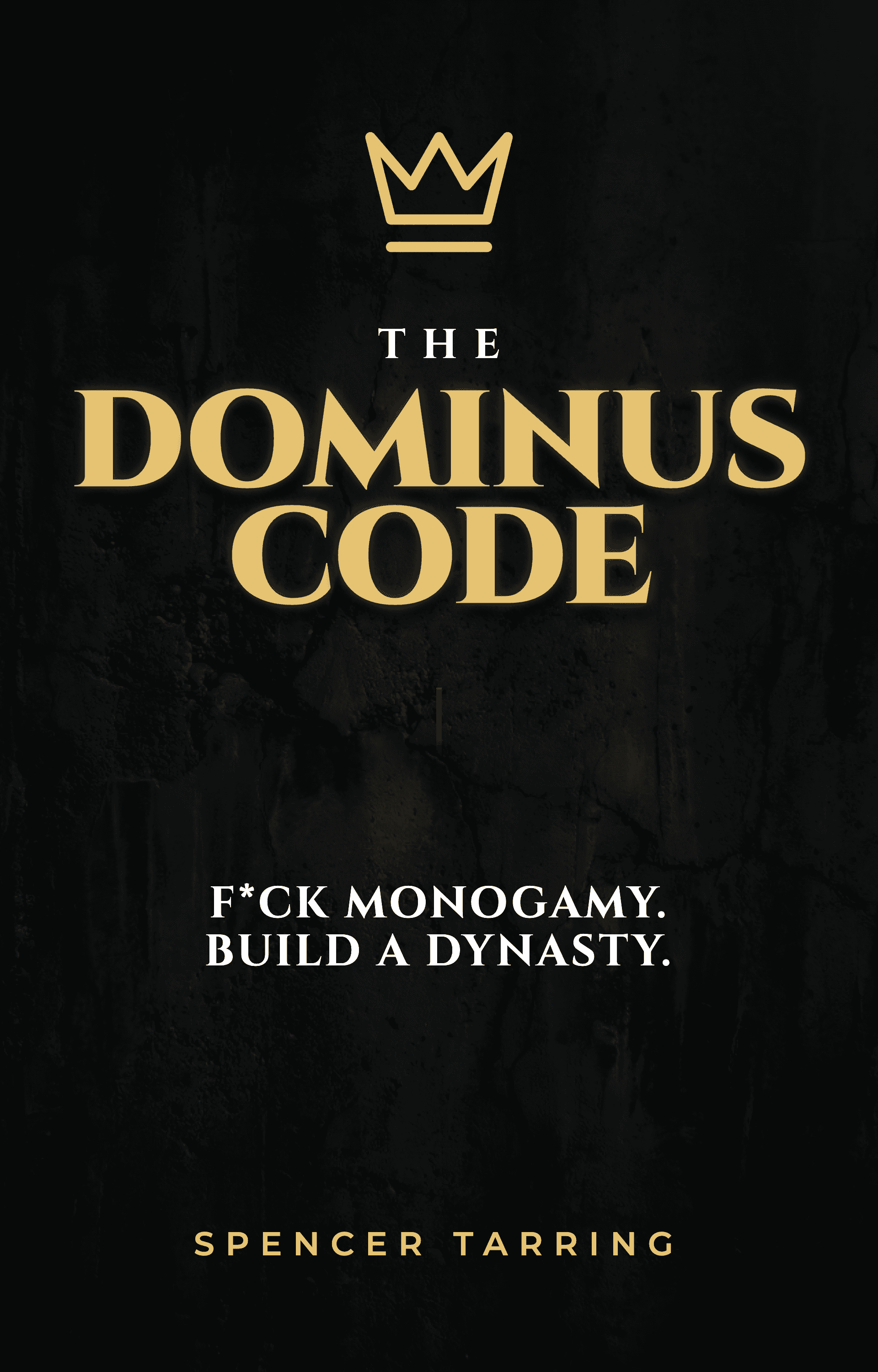
The book by Spencer Tarring
The Dominus Code
F*ck Monogamy. Build a Dynasty.
The provocation opens the argument. Continuity gives it purpose.